
Thursday, 28 March 2019

Tuesday, 19 March 2019
St Patrick's Day Play Dough!
Recipe for making play dough:
On the 18th of March, Room 8 made green, not-so-sparkly play dough. It was to celebrate St Patrick’s day. This took part in the afternoon at St Patrick’s school.
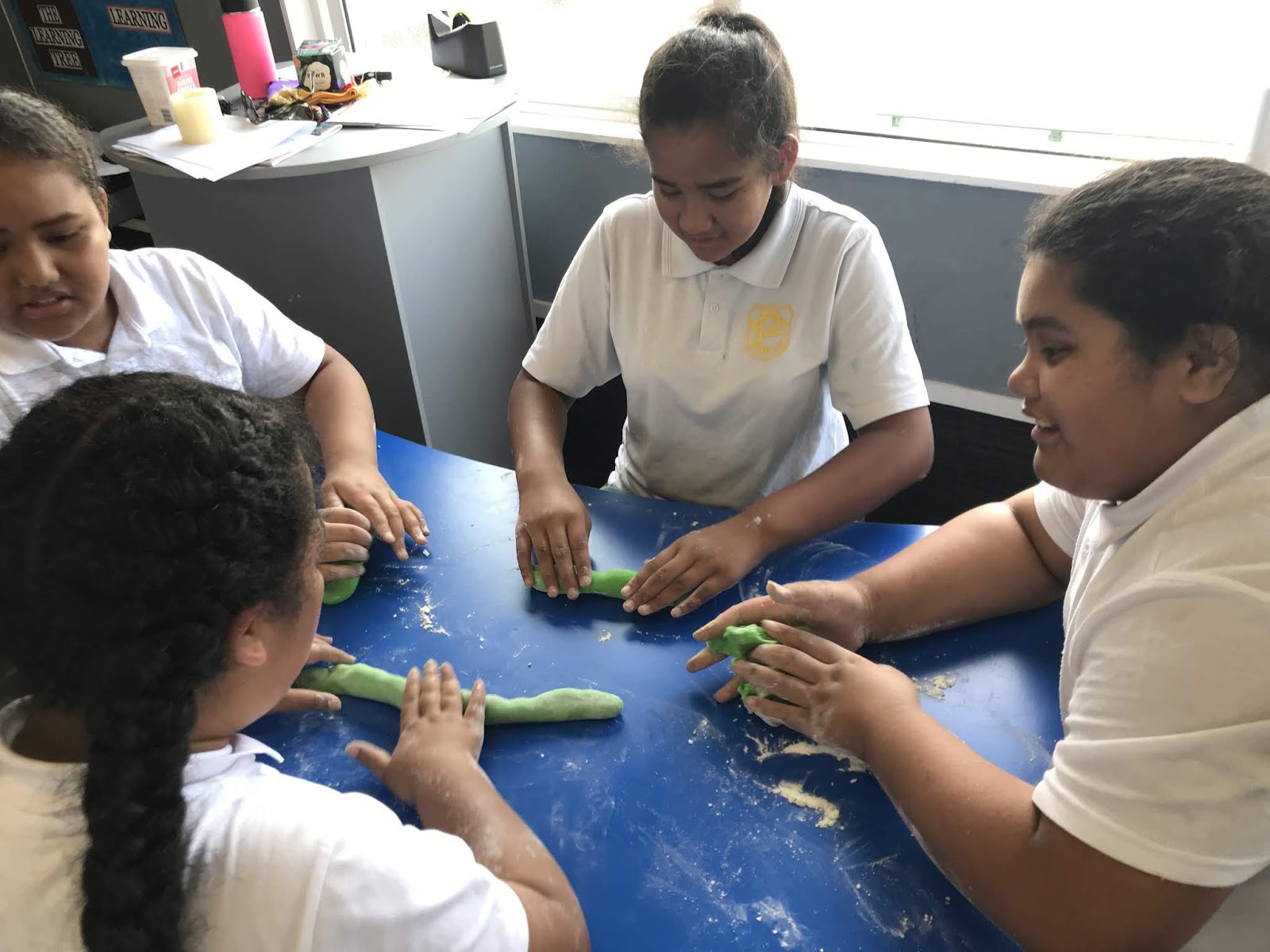
In class, we were separated into five groups and each person had an important role to do. One of us put all the ingredients into a bowl, the other read out the instructions for making the play dough. Another person had a rubber glove to knead the play dough and the other cleaned the table after we were done. The teacher also added some glitter for the final touches.
- 2 cups of flour
- ½ cup of salt
- 2 tbsp of oil
- 2 tbsp of cream of tartar
- 2 cups of boiling water
- 1 tsp of food colouring
- Mix all dry ingredients.
- Add oil and boiling water with food colouring and mix well.
- Store in airtight container.
On the 18th of March, Room 8 made green, not-so-sparkly play dough. It was to celebrate St Patrick’s day. This took part in the afternoon at St Patrick’s school.
In class, we were separated into five groups and each person had an important role to do. One of us put all the ingredients into a bowl, the other read out the instructions for making the play dough. Another person had a rubber glove to knead the play dough and the other cleaned the table after we were done. The teacher also added some glitter for the final touches.
The Play dough was very sticky at first and was in need of lots of flour for it to shaped properly. Adding more flour also helped it to not stick to the table.
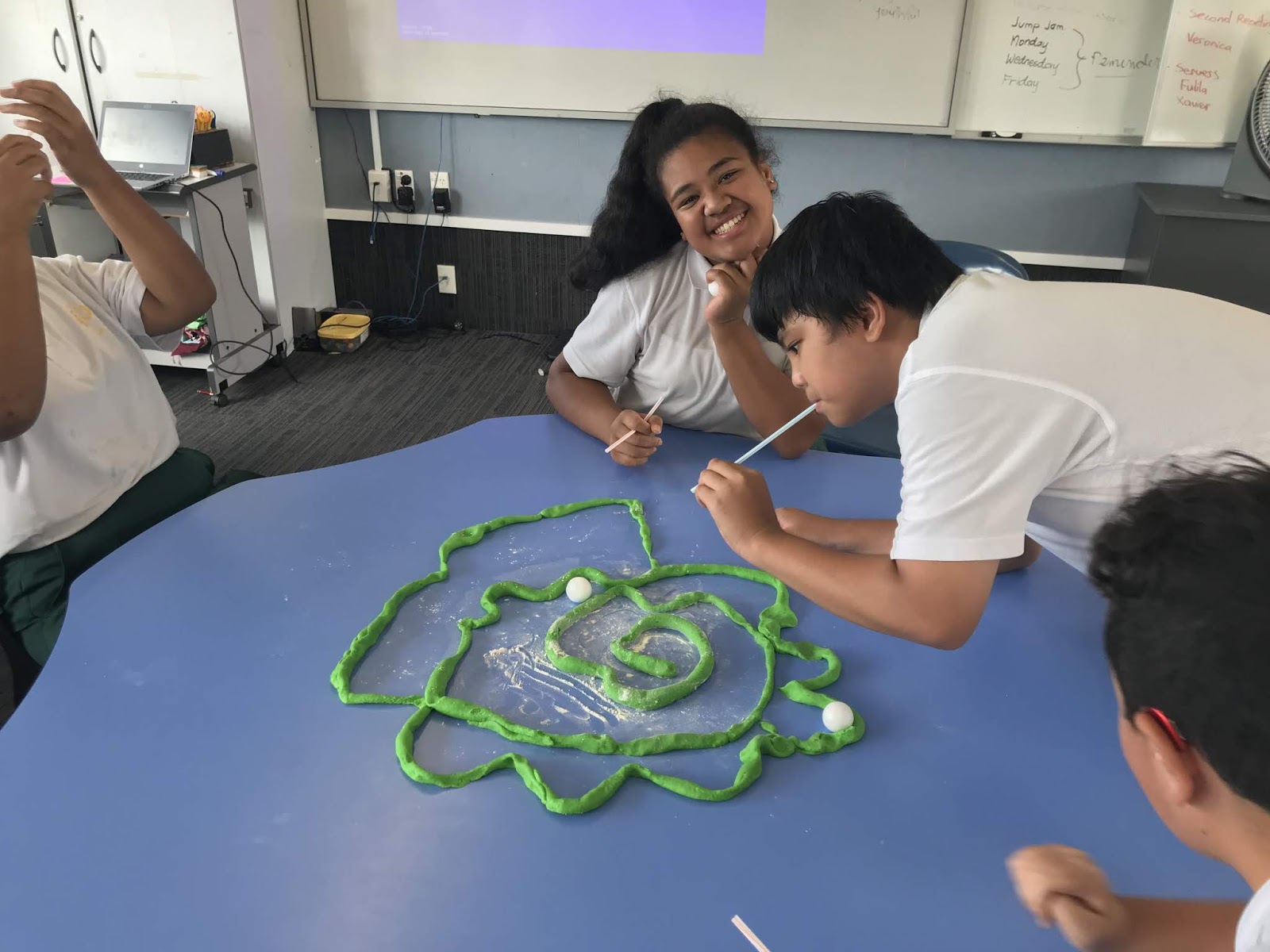
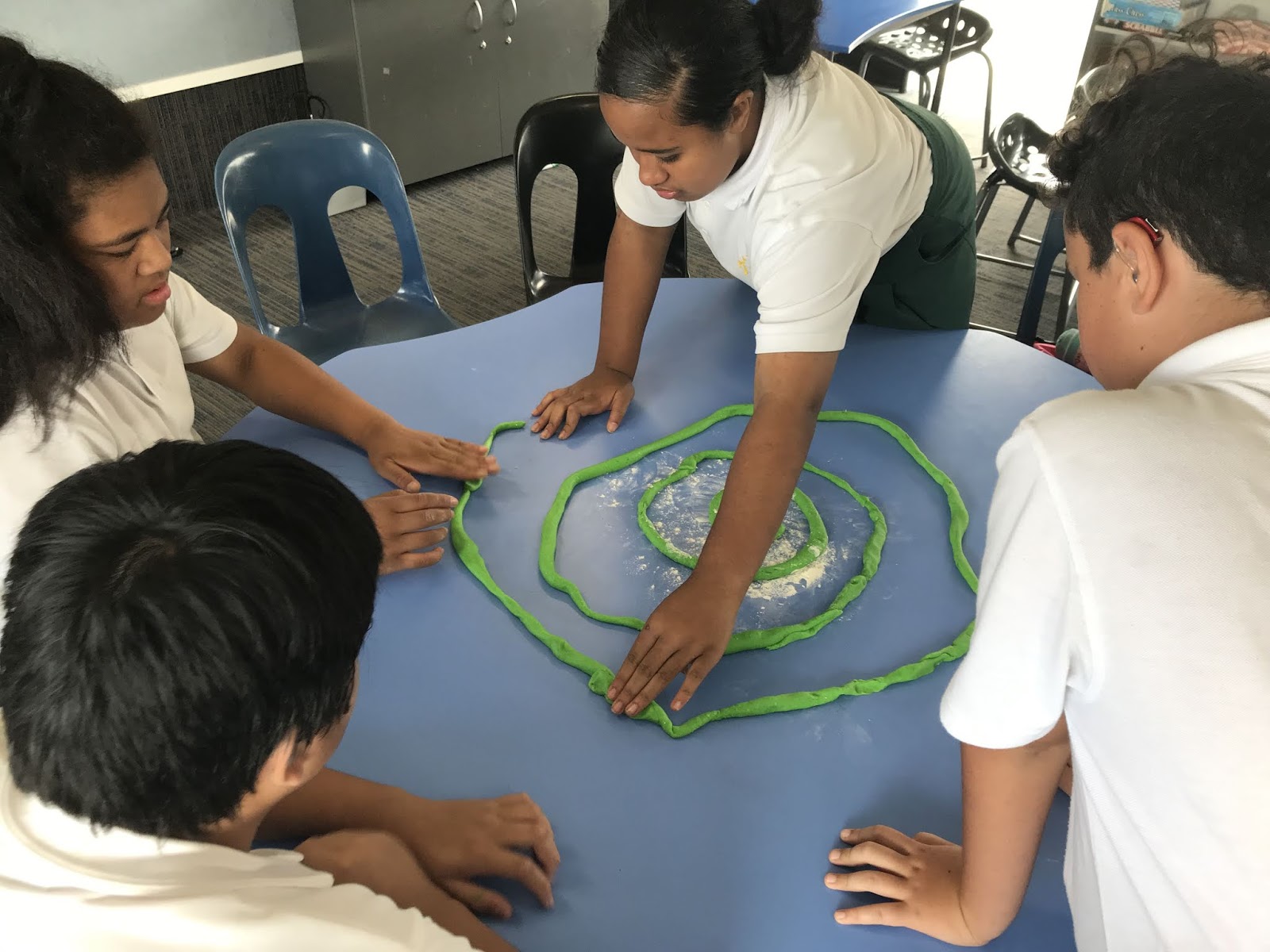
After all that, we were told to roll it into a thin and long snake and twirl it into a spiral. When we were done, we had to blow through a straw and guide a polystyrene ball to the middle of the spiral. Then we could form it into any shape we wanted. I made a soccer field and bent the end of two straws and stuck it to the side of the square to make it look like goal posts. Me and my friend used two other straws to blow the polystyrene ball into each other's goals.
We had heaps of fun making play dough, even though it was very messy.
Wednesday, 13 March 2019

Tuesday, 5 March 2019

Friday, 22 February 2019
Who am I?
Talofa lava! My name is Roneeza and I am a year 7 student in St Patrick’s school. I live in a Samoan family with two other sisters, which makes me the middle child. My little sister and I are close, even though we fight sometimes. We both like the same music and are learning how to play the drums.
I enjoy drawing, listening to music and reading comics/fiction books. I also like solving maths problems.
My goals are trying to get better at writing and master whatever I’m bad at.
This year I would like to achieve highly in all of my subjects ready for when I move into Year 8.
I guarantee you will enjoy reading my blog because I like to write about what interests me.
Wednesday, 12 December 2018
Monday, 3 December 2018
This trip we took was fascinating and fun at the same time!
St. Patrick’s School - the oldest school in Auckland, is situated in the heart of the suburb of Panmure in Auckland. It’s surrounding area offers many opportunities to learn about the past - together with numerous chances for family outings.
One key feature of Panmure is the Panmure bridge. But the bridge that stands today is not the original! Auckland Provincial Council in February 1857 for a bridge to get across to the other side, without having to rely on boats and boatmen, or crossing at Otahuhu. In 1864-65, the first bridge was constructed of stones, imported from Melbourne and iron from Sydney.
Every Thursday, room 8 would walk outside the school and find information about the original Panmure bridge built in 1864-65. We call it E.O.T.C. (Education outside the classroom). During one of our walks, we found an alleyway, not far from the panmure library. In it, was a mural, which is a painting wall. It was a mural of history in Panmure during 1920. We all read the the writing that was authorized on the wall and started taking notes.
The History of Panmure:
One key feature of Panmure is the Panmure bridge. But the bridge that stands today is not the original! Auckland Provincial Council in February 1857 for a bridge to get across to the other side, without having to rely on boats and boatmen, or crossing at Otahuhu. In 1864-65, the first bridge was constructed of stones, imported from Melbourne and iron from Sydney.
Every Thursday, room 8 would walk outside the school and find information about the original Panmure bridge built in 1864-65. We call it E.O.T.C. (Education outside the classroom). During one of our walks, we found an alleyway, not far from the panmure library. In it, was a mural, which is a painting wall. It was a mural of history in Panmure during 1920. We all read the the writing that was authorized on the wall and started taking notes.
The History of Panmure:
A volcano caused the Panmure basin to sync. Mt Wellington was created by an eruption in 9,300 BC. We also found out that volcano soil is very fertile. The Maori, Tamaki area is possibly the largest Maori town in the 1,800’s. The first arrival of the Europeans was in 1820, Samuel Marsden. Aboard the ship was 79 families, 71 of them were catholic. Then, the catholic built St Patrick’s School in 1840, St Mathias was built in 1865 and Panmure district was established in 1875 and the Anglican school stopped enduring. St Patrick’s School is still a flourishing school, meaning it is still developing rapidly and successfully. Sadly, none of the original buildings are in existence, meaning it does not exist anymore. The mural was painted by Billy McQueen in July 1997.
Facts about the Original Panmure bridge:
Between 1864 and 1865 the first bridge over the Tamaki River was built here. The bridge was officially opened on October 20th 1065 by Robert Graham. The first bridge was constructed of stones imported from Melbourne and iron from Sydney. The first panmure bridge was designed by William Collett and William Weaver supervised the construction. The original panmure bridge was 195 meters long and 6 meters wide.
After all of us were done taking notes and reading it to make sure they haven’t missed anything, then we all walked back to St. Patrick’s school the same way we came here at the alleyway. Then, we had to write a report of what we have seen today. Some of us wrote in their notes they took during the walk. Others looked up information on their chromebooks. After a few minutes, our teacher, Ms Dines asked some of us to share their report about the walk.
Today was a very exciting day. I have learnt a lot during our walk. It was also good exercise. I hope something like today happens again soon!
Facts about the Original Panmure bridge:
Between 1864 and 1865 the first bridge over the Tamaki River was built here. The bridge was officially opened on October 20th 1065 by Robert Graham. The first bridge was constructed of stones imported from Melbourne and iron from Sydney. The first panmure bridge was designed by William Collett and William Weaver supervised the construction. The original panmure bridge was 195 meters long and 6 meters wide.
After all of us were done taking notes and reading it to make sure they haven’t missed anything, then we all walked back to St. Patrick’s school the same way we came here at the alleyway. Then, we had to write a report of what we have seen today. Some of us wrote in their notes they took during the walk. Others looked up information on their chromebooks. After a few minutes, our teacher, Ms Dines asked some of us to share their report about the walk.
Today was a very exciting day. I have learnt a lot during our walk. It was also good exercise. I hope something like today happens again soon!
Subscribe to:
Posts (Atom)